
-

- No Comments
- October 29, 2026

Local SEO Checklist for Small Businesses in Pakistan
Local SEO helps businesses become more visible when people search for products or services in a specific area. For small businesses in Pakistan, it can help attract nearby customers who are looking for services such as plumbing, home improvement, healthcare, restaurants, or digital marketing.
A strong local SEO strategy involves maintaining accurate business information, optimizing your Google Business Profile, creating relevant website content, and building trust through genuine customer feedback.
Use this checklist to improve your business’s local search presence.
Set Up and Optimize Your Google Business Profile
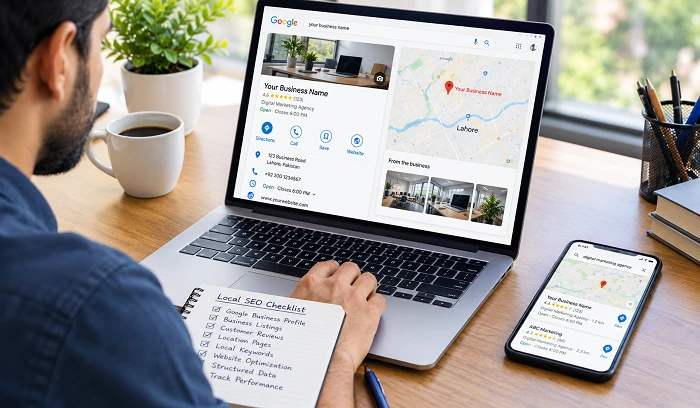
A Google Business Profile allows eligible businesses to manage how their information appears on Google Search and Maps. An accurate, complete profile helps potential customers understand what your business offers and how to contact you.
Review the following details:
- Business name, address, and phone number
- Primary and relevant secondary categories
- Business hours and contact information
- Services and business description
- Recent, genuine photos of your business or work
Choose categories that accurately represent your main business activities. Avoid adding keywords or location names to your business name unless they are genuinely part of its real-world name.
Businesses that operate from customer locations or serve specific areas should follow Google’s eligibility and address-display requirements.
Keep Your Business Information Consistent
Your business details should be accurate wherever customers find them online. Inconsistent names, phone numbers, or addresses can create confusion and make it harder for people to verify your business.
Review your website, Google Business Profile, social media pages, and relevant business directories. Update outdated contact details and correct any errors.
For example, if your business phone number changes, update it across your important online profiles rather than leaving old information in place.
Consistency does not mean that every platform must use identical formatting. The important thing is that your business information remains accurate and recognizable.
Research Local Search Terms
Local keyword research helps you understand how potential customers search for services in particular cities or regions.
Start by identifying your main services, target locations, and the terms customers are likely to use. For example, a web design agency serving Lahore might target searches related to web design services in Lahore.
Consider these approaches:
- Review relevant searches in Google Search Console.
- Use Google’s autocomplete suggestions to explore search wording.
- Examine the language used on competitors’ service pages.
- Identify specific services that customers search for locally.
Choose keywords based on relevance and search intent. Do not create separate pages for every minor variation of a location-based phrase when the search intent is essentially the same.
Create Useful Location-Specific Pages
If your business genuinely serves multiple cities or areas, dedicated location pages may help visitors find relevant information.
Each page should explain the services available in that location and provide useful details about how your business serves local customers.
For example, a company offering services across Lahore and Islamabad could create separate pages if each location has a distinct audience, offering, or service context.
Avoid publishing dozens of nearly identical pages that only replace one city name with another. Location pages should provide meaningful information rather than exist solely to target search queries.
Encourage Genuine Customer Reviews
Customer reviews can help potential clients evaluate your business before contacting you. They may also contribute to local search visibility, although no particular number of reviews guarantees higher rankings.
Ask customers to share honest feedback about their experiences. Make the process simple by providing a direct review link after a completed purchase or service.
Respond professionally to both positive and negative reviews. Thank customers for useful feedback, address legitimate concerns, and avoid sharing private customer information in public replies.
Never buy reviews, create fake customer accounts, or offer incentives in exchange for positive feedback. These practices can undermine trust and violate platform policies.
Improve Your Website for Local Searches
Your website should clearly explain what your business does, where it operates, and how visitors can contact you.
Review your main service pages and contact page to ensure they include accurate business information. Where relevant, mention the locations you serve naturally within the content.
Other useful improvements include:
- Providing a clear contact page.
- Making your phone number easy to find.
- Adding a map when it helps visitors locate your premises.
- Make sure your website is easy to use on mobile devices.
- Linking related service and location pages where useful.
If you need help improving your website’s search performance, visit Globally Matters’ SEO and digital marketing services.
List Your Business in Relevant Directories
Business directories can help people find and verify your company. Focus on reputable platforms that are relevant to your industry, market, or location.
Complete each listing with accurate business details and a relevant website link where permitted.
Avoid submitting your business to large numbers of low-quality directories simply to build links. Prioritize platforms that offer genuine visibility or useful referral opportunities.
Review existing listings periodically to correct outdated information and remove duplicates when possible.
Use Local Business Structured Data Where Appropriate
Structured data can help search engines interpret information about your business. Depending on your business type, relevant LocalBusiness structured data may describe details such as your name, address, phone number, and opening hours.
Make sure your structured data reflects the information displayed on your website. Use the appropriate type for your business and validate the markup with Google’s available testing tools.
Structured data does not guarantee enhanced search results or better rankings. Its purpose is to communicate information in a format that search engines can interpret.
Track Your Local SEO Performance
Monitor your results to understand which activities are helping your business reach potential customers.
Google Business Profile performance data can provide insights into how people find and interact with your profile. Google Search Console can help you review website search queries, clicks, impressions, and average positions.
Pay attention to changes in relevant search traffic, calls, website visits, and genuine customer enquiries.
Compare performance over time rather than judging your strategy from a short period. Results may vary depending on competition, location, demand, and other factors.
Final Thoughts
Local SEO requires accurate business information, a well-maintained Google Business Profile, useful location-specific content, and a trustworthy online presence.
Small businesses in Pakistan can begin with the basics: correct their listings, review their website, encourage honest customer feedback, and monitor relevant search performance. Improve these areas gradually according to business needs and available resources.
Consistent maintenance can help customers find reliable information about your business and make informed decisions about contacting you.