
-

- No Comments
- November 2, 2026

Link Building for Small Businesses: Effective Ways to Earn Backlinks
When people research a business online, they often come across recommendations, industry articles, and other websites that mention relevant companies. These mentions can help your business reach a wider audience and attract relevant visitors to your website.
Link building involves earning links from other websites to your own pages. For small businesses, link building should focus on building relevant relationships, attracting potential customers, and increasing the visibility of useful content.
This guide covers practical ways to approach link building, evaluate opportunities, and avoid practices that conflict with Google’s spam policies.
What Is Link Building?
Link building is the process of earning links from external websites that point to pages on your website. These links are commonly known as backlinks or inbound links.
For example, an industry publication may link to a business’s website when referencing one of its guides or mentioning its services.
Visitors can use these links to access your website and explore its content. Search engines also use links to discover pages and understand connections between online resources.
A valuable backlink should fit naturally within the content and offer readers a relevant resource, rather than being placed solely to affect search rankings.
Why Does Link Building Matter?
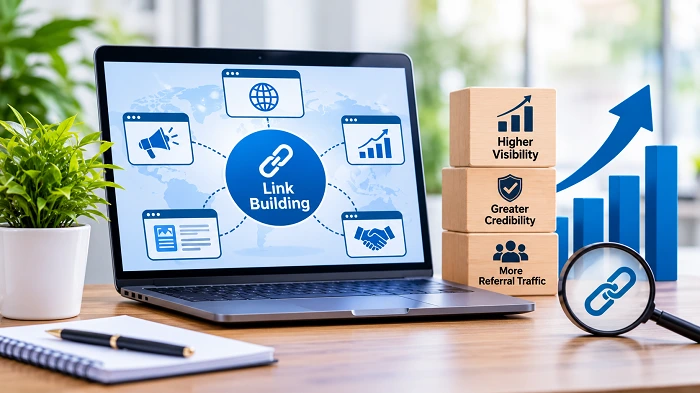
Relevant backlinks can help strengthen your website’s visibility, credibility, and online reach.
Increase Brand Exposure
Being mentioned by industry publications, professional organizations, and relevant websites can introduce your business to a wider audience.
For example, a local home improvement company featured in a relevant publication may reach readers who are already interested in its services.
Bring Referral Traffic
Visitors can find your website by clicking links on other websites or platforms.
A useful article that references your business may bring people who want to explore your services, read your content, or request information.
Help Search Engines Discover Content
Search engines use links to discover webpages and understand how different resources are connected. External links can therefore help search engines find your content.
However, earning backlinks does not guarantee indexing, higher rankings, or increased traffic.
Establish Industry Connections
Working with relevant publishers, businesses, and professionals can create opportunities for useful collaborations, editorial coverage, and brand mentions.
These relationships can have value beyond search engine visibility.
How to Build Relevant Backlinks
Small businesses can explore several approaches without pursuing large numbers of links or using manipulative tactics.
1. Publish Useful Resources
Focus on topics that answer the questions your potential customers often have.
Useful resources may include:
- Practical industry guides.
- Original research and surveys.
- Detailed tutorials.
- Helpful checklists.
- Case studies based on genuine business experience.
For example, a digital marketing agency might create a guide showing small businesses how to improve their website content.
Other websites may link to these resources when they offer relevant and helpful information to their readers. A clear content strategy for small businesses can help you identify topics worth developing.
2. Contribute to Relevant Publications
Guest posting involves creating an article for publication on another website, targeting its audience.
It can provide an opportunity to share your knowledge, reach new readers, and develop professional relationships.
Before approaching a publisher, check:
- Whether its subject areas match your expertise.
- Whether its articles provide genuine value.
- Whether it has clear editorial guidelines.
- Whether its audience is relevant to your business.
- Whether submitted content receives proper editorial review.
Avoid publishing similar articles across unrelated websites simply to obtain backlinks.
If a guest post involves payment or another commercial arrangement, the publisher should qualify paid links appropriately. Google recommends rel=”sponsored” for paid placements and also accepts rel=”nofollow”.
Google for Developers+1
3. Connect With Relevant Industry Websites
Identify publications, professional organizations, and businesses that cover topics related to your services.
You can build relationships by:
- Sharing useful industry information.
- Participating in relevant professional communities.
- Connecting with editors and business owners.
- Contributing expert comments where appropriate.
- Offering useful resources for existing articles.
Focus on meaningful communication rather than sending generic backlink requests.
4. Find Unlinked Brand Mentions
Some websites may mention a business without linking to its website.
Search for your business name and review relevant mentions. If a published reference would benefit from a link to your website, contact the editor with a polite request.
Explain what additional information the page offers and how it can benefit readers.
A link is not necessary for every brand mention, so avoid making requests where it adds no real value.
5. Explore Local Business Opportunities
Local businesses can develop connections with organizations and publications in their communities.
Potential opportunities include:
- Business associations.
- Professional organizations.
- Local publications.
- Community initiatives.
- Industry events.
- Regional business directories with genuine editorial standards.
For example, a Lahore-based business could share valuable insights with a local business publication or contribute to an industry event.
Keep your business information accurate and consistent across all online platforms. For more guidance, see our Local SEO Checklist for Small Businesses in Pakistan.
6. Review Broken Backlinks
A website may link to a page on your domain that has since moved or been removed.
Check your backlink reports for links pointing to broken or unavailable URLs.
Depending on the situation, you can:
- Restore the original page if its information is still useful.
- Redirect the old URL to a closely related replacement.
- Contact the linking website and suggest an updated destination.
Avoid redirecting unrelated URLs to your homepage just to retain backlinks. The replacement should make sense to visitors.
How to Evaluate a Website Before Pursuing a Link
Not every website is a suitable source for a backlink. Review the publication and its content before investing time in outreach.
| Evaluation factor | What to consider |
| Topical relevance | Does the website cover subjects related to your business? |
| Content quality | Are its articles useful, accurate, and original? |
| Audience | Are its readers relevant to your products or services? |
| Editorial standards | Does it review and manage submitted content? |
| Website reputation | Does it have a credible publishing history? |
| Link context | Would the link help readers find relevant information? |
Third-party SEO metrics can provide additional information, but they should not determine your decision on their own.
A website with a high authority score is not automatically a good link opportunity.
Link-Building Practices to Avoid
Google’s spam policies identify several link-related practices that can manipulate search rankings.
Avoid the following:
- Buying links to manipulate rankings: Paying for links that pass ranking credit can violate Google’s link spam policy.
- Automated link creation: Using software or services to generate backlinks at scale can create unnatural link patterns.
- Excessive link exchanges: Repeated exchanges primarily intended to influence rankings are discouraged.
- Unrelated guest posts: Publishing content on websites without a meaningful connection to your subject solely for links offers little reader value.
- Low-quality directories: Avoid directories created mainly to distribute backlinks.
- Keyword-rich anchor text: Repeatedly using exact-match commercial keywords in external links can appear manipulative.
- Hidden links: Links should be accessible to visitors and provide a clear purpose.
Paid advertising and sponsorship links are allowed when handled appropriately. Use rel=”sponsored” or rel=”nofollow” for qualifying paid placements rather than treating them as ordinary editorial endorsements.
Review Google’s official Spam Policies for Google Search before implementing a link-building campaign.
Google for Developers+1
How to Monitor Your Backlinks
After earning links, review your backlink profile to understand which websites reference your content.
Google Search Console
Google Search Console includes a Links report that shows information about external links Google has identified for your website.
You can review:
- Websites linking to your pages.
- Pages receiving external links.
- Common linking text.
- Internal links across your website.
The report is useful for reviewing your link profile, although it does not necessarily include every backlink.
Third-Party SEO Tools
Tools such as Ahrefs and Semrush provide additional backlink information, including referring domains, linking pages, and changes over time.
Use these reports to identify potential opportunities and investigate links that deserve closer attention.
Remember that different platforms maintain their own backlink databases, so their reported totals may vary.
Referral Traffic
Google Analytics 4 can help you identify visitors arriving from other websites.
Review referral sources to see which external websites send visitors to your pages.
Consider whether these visitors explore your content, visit service pages, or complete useful actions.
How Often Should You Review Your Link Profile?
Review your backlinks periodically rather than focusing on daily changes.
A monthly or quarterly review may be sufficient for many small businesses.
During each review, check:
- New referring websites.
- Important pages receiving backlinks.
- Relevant brand mentions.
- Referral traffic.
- Broken backlinks.
- Changes in link relevance and quality.
Keep a record of outreach activities and successful editorial contributions. This can help you identify which approaches are worth continuing.
Avoid setting arbitrary backlink targets. Focus on earning relevant references that provide value to your audience.
Final Thoughts
Link building is most useful when it supports genuine relationships, useful content, and relevant online references.
Small businesses can start by publishing helpful resources, contributing to suitable publications, connecting with industry websites, and exploring local opportunities.
Avoid buying links to manipulate rankings or relying on automated backlink schemes. Review your link profile periodically and prioritize quality, relevance, and transparency.
A responsible approach to link building can complement your wider SEO efforts while helping more people find your business online.